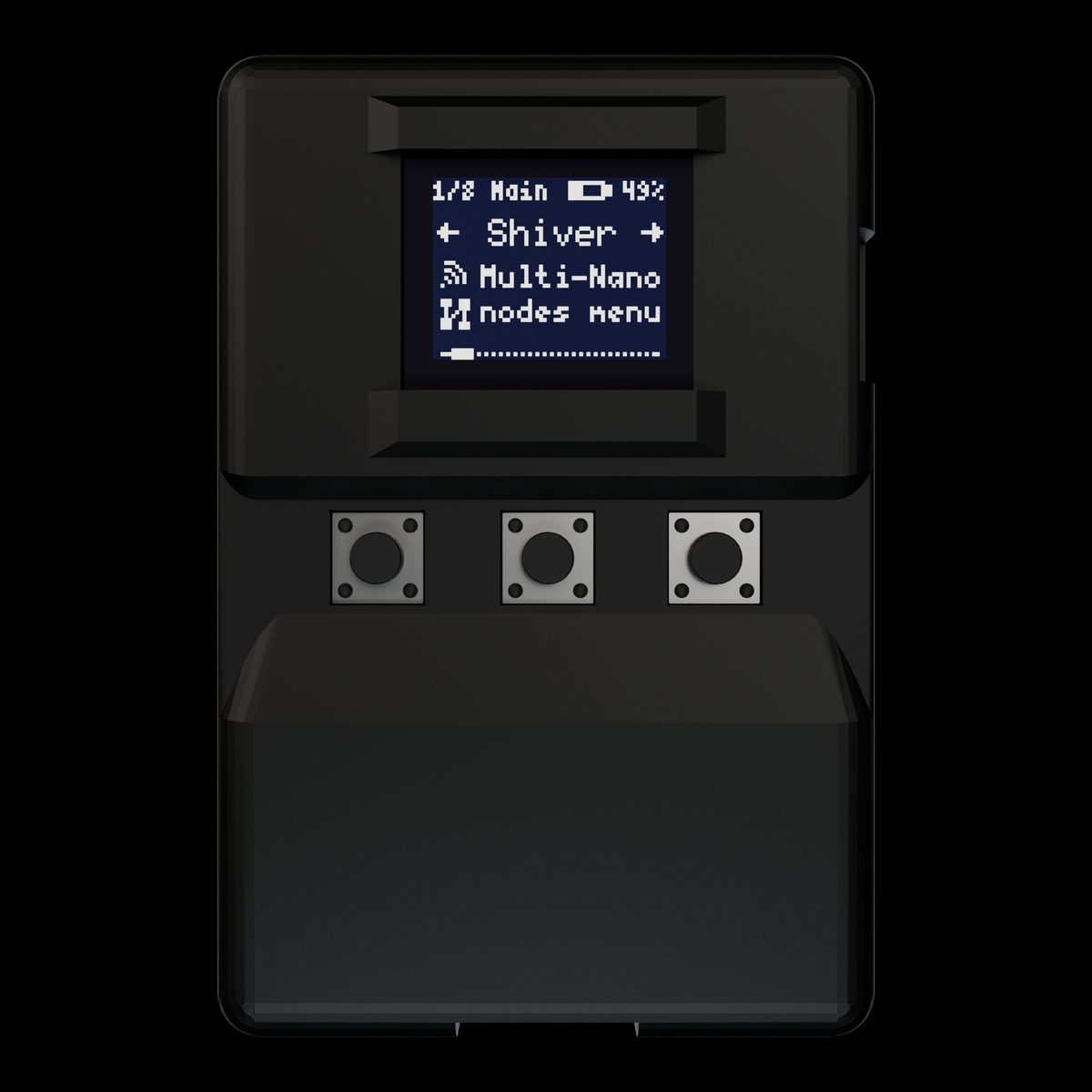
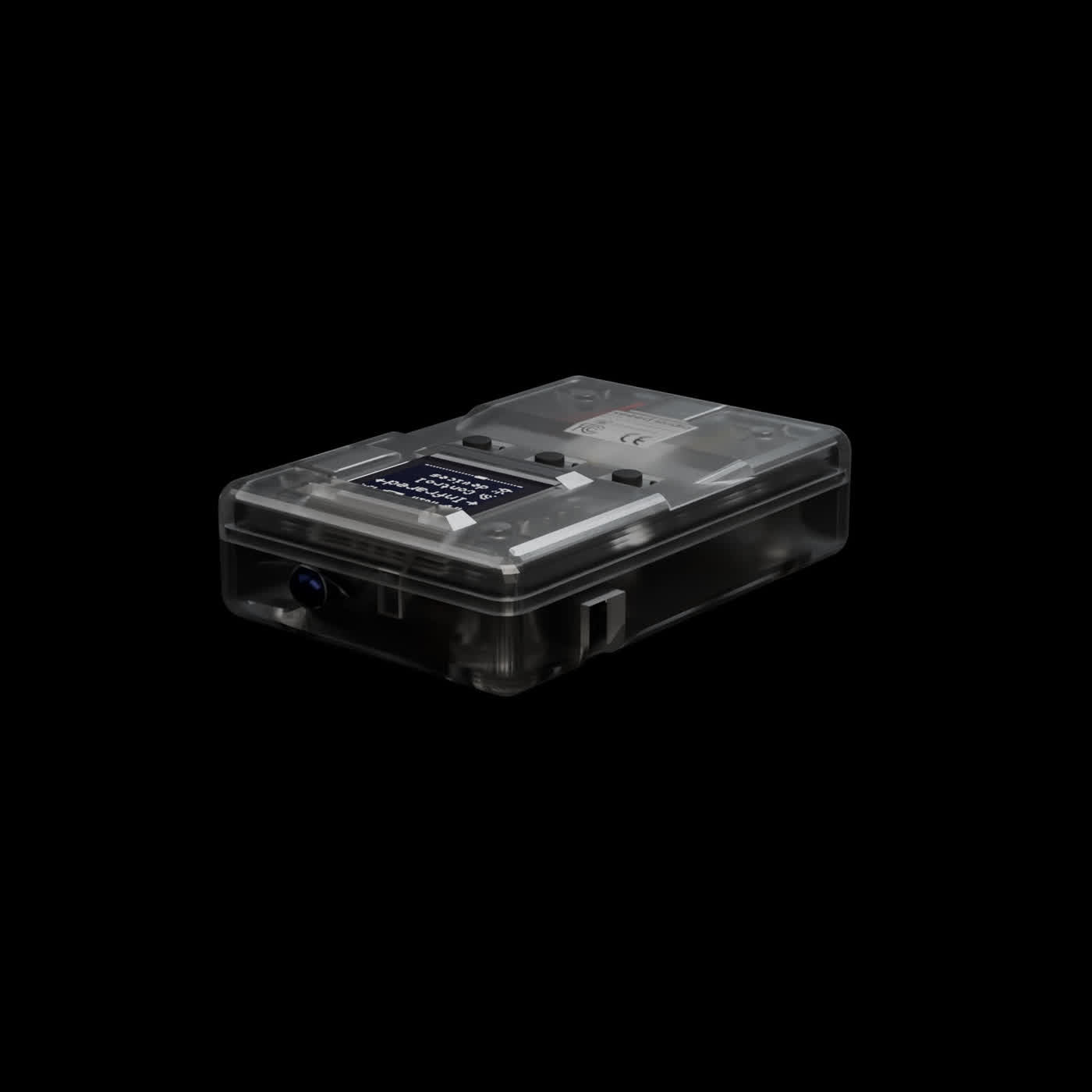
On-device multi-tool.
Host-driven when you plug in.

BLEShark Nano is the pocket BLE, Wi-Fi, and IR research tool. Polished OLED workflows unplugged; open Rust CLI over USB-C when you want your laptop as the brain. Capture and monitor on the radio; analyze and script on the host. No dongle circus for the basics.

Why we made it.

Rough development boards with half-maintained firmware. Expensive enterprise gear that an ESP32 in your pocket can often replace for lab work. And multi-tools that trap you in a closed menu. The Nano is the third option: field multi-tool unplugged, open host platform when plugged in.

What it is

The BLEShark Nano is a pocket-sized wireless research tool for Bluetooth Low Energy and Wi-Fi 2.4 GHz, plus infrared. Unplugged, it is a polished multi-tool on a 0.66" OLED. Plugged in over USB-C, it is an open host-driven RF peripheral: your laptop runs analysis and scripts; the Nano runs the radios.

ESP32-C3 backbone, USB-C, 6 to 12 hours of active use. SoftAP edge (portals and on-device router), USB Wi-Fi adapter path, monitor into Wireshark, and a full field menu when you leave the desk.

Why we built it

We wanted polish at $49.99, and a real incentive for intermediate and advanced operators, not only beginners. Closed firmware alone is a dead end for automation. Host tooling alone is a dongle stack nightmare.

So the architecture is deliberate: Nano for RF and edge I/O; open Rust SDK/CLI for compute, storage, and composition. Same device both ways.

Engineers shipped to
7,000+
Researchers, red teamers, hobbyists.
Assembled in
Canada
Every Nano hand-assembled and quality-checked here, not a mystery OEM board.
Now scriptable
SDK
Open-source, host-driven CLI over USB-C. Free for every owner.
Per Nano
$49.99
Polish at a price most dev boards undersell on.

Why the SDK exists.

Same Nano you use on-device. Plug USB-C and your laptop becomes the brain: open tooling, host compute, less friction for real workflows.

Host

SDK & CLI

Open-source Rust CLI and crates over USB-C. Scan, capture, GATT, HID, IR, files, JSON out - your automation, not a proprietary DSL.

Radio

USB research radio

Linux Wi-Fi adapter (SLIP + NAPT), monitor into Wireshark, raw 802.11 TX when you need inject control from the host.

Edge

SoftAP & router

Captive and evil portals with host-streamed lab pages. On-device SoftAP router: clients on the Nano, upstream via STA NAPT.

Field

OLED multi-tool

Unplugged: scan, handshake, PMKID, spam, Bad-BT, IR, finders, Shiver mesh. The on-device workflows people already know.

Host router CLI, open HTML hoster, and advanced MITM workflows are shipping soon. App catalog and CTF platform when they are ready to demo.

What it does.

Host CLI
Drive Wi-Fi, BLE, and IR from one cross-platform Rust shell over USB-C.
USB Wi-Fi adapter
STA + SLIP + NAPT - a Linux tun path so the Nano acts as a pocket research radio.
Live monitor
Stream 802.11 monitor frames into Wireshark in real time.
Raw 802.11 TX
Inject frames from the host (hex path; named templates landing in the CLI).
Handshake + PMKID
4-way EAPOL and PMKID to pcap / hashcat-friendly host workflows.
BLE central
Scan, connect, enumerate GATT, read/write, subscribe to notifies.
BLE advertise & serve
Custom advertising and GATT server tables from the host.
HID + Bad-BT host
Keyboard/mouse/gamepad paths and HID bridge (Linux inputs → BLE).
Portal host stream
Serve multi-file lab HTML from your computer while the Nano runs SoftAP.
Device files
List, pull, and push captures, portals, and settings.
Vendor intel
On-host OUI and company databases, fully offline.
JSON everywhere
Every command emits JSON for automation and pipelines.
Rust libraries
Documented crates to build your own tools - no proprietary DSL.
Wi-Fi router
SoftAP clients → STA upstream with NAPT - pocket edge router on-device.
USB Wi-Fi adapter
Plug into a laptop for a host network path (SLIP + NAPT).
Captive portal
SoftAP captive portal for authorized lab phishing and training.
Evil portal
Login-style lab pages; credentials captured on-device.
Host HTML stream
Lab pages live on your computer; Nano is the radio and SoftAP.
Connect & saved nets
Join networks from the OLED; multi-network store for field use.
Live monitor
Host-side promiscuous / associated monitor into pcap and Wireshark.
Wi-Fi scan
Survey 2.4 GHz APs with analysis graphs and exportable JSON.
Wi-Fi finder
RSSI hot/cold locator from a scan pick.
Handshake capture
WPA handshakes - single AP, SSID group, or rotating sweep.
PMKID capture
PMKID path alongside full EAPOL captures.
Deauth testing
Authorized deauth testing (region-dependent firmware).
Deauth checker
Detect deauth activity in the air.
Wi-Fi AP spam
Rickroll, random, funny, custom, and targeted modes.
BLE scan
Discover BLE devices with manufacturer context.
BLE spam
Spoof BLE advertisements across vendor styles.
BLE finder
RSSI locator for a chosen advertiser.
Airhorn
Find My-style beep loop for separated tags.
Bad-BT
DuckyScript HID keyboard (plus host HID paths when plugged in).
TV-B-Gone
Turn off common TVs in range.
Remote slots
Up to five Flipper-style remotes with named buttons.
Learn / receive
Capture IR timings protocol-agnostically.
Transmit
Replay learned or stored codes; host IR TX/RX too.
Execute
Fan-out scan, portal, handshake, BLE, IR, and control to peers.
Dashboard
Multi-page mesh overview across nodes.
Pair
BLE pairing flow for new mesh members.
Self-organising mesh
Power on and discover peers over ESP-NOW.
Self-healing routes
Nodes drop; mesh re-routes.
Sync
Pull/push PCAPs, portal JSON, settings, and files.
Chat
Short team messages over the mesh.
Diagnostics
Burst/RTT probes for link health.
Long Range
Optional PHY that trades rate for distance (peers must match).
Easy setup
On-device Wi-Fi picker and on-screen keyboard.
Config
Edit Shiver, Wi-Fi, BT, IR, display, and system settings.
Transfer portal
SoftAP file transfer for scripts, portals, and lists.
Files & storage
Browse captures and free space on SPIFFS.
DuckyScript editor
Write Bad-BT scripts on-device.
Web flasher
flasher.infishark.com for recovery and updates.
Auto updates
Signed, verified OTA over saved networks.
Battery status
On-device battery view for field use.
Scroller
Control short-form video feeds over BLE.
TxtViewer
Read plain text files on-device.
Mini keypad
Custom Bluetooth keypad macros.
Stopwatch
Millisecond-accurate stopwatch.
Timer
Custom timers with screen alerts.
Malware Hunter
Vampire-survivors action with a boss fight.
Flappy Bird
Tap to fly. Doubles as Emergency Mode.
Space Invaders
Classic alien shooter.
Pong
Battle the AI in a retro paddle game.
Breakout
Break bricks with a bouncing ball.
T-Rex
Endless runner.
Racer
Tight turns, no collisions.

Drive it from your computer

Closed multi-tools trap you in a menu. Laptop dongle stacks burn an afternoon on drivers and five CLIs. Plug the Nano over USB-C and use an open-source Rust CLI: the device is the radio; your machine is the brain for analysis, storage, and scripts.

One shell, every radio
Wi-Fi, BLE, and IR from a single cross-platform CLI.
USB Wi-Fi adapter
SLIP + NAPT path so the host treats the Nano as a research radio.
Live monitor
Stream frames into Wireshark without the usual adapter mess.
Raw TX control
Inject 802.11 frames from the host for authorized lab work.
Capture → host crack
PMKID and EAPOL to host-ready artifacts and hashcat workflows.
Portal HTML on the host
Stream multi-file lab pages while SoftAP runs on the Nano.
Full BLE host path
Scan, GATT central, advertise, serve, HID bridge.
JSON pipelines
Compose with jq, scripts, and CI - no proprietary language to learn.
Rust crates
Build your own tools on documented libraries.
Linux / macOS curl -fsSL https://cdn.infishark.com/install.sh | sh
Windows irm https://cdn.infishark.com/install.ps1 | iex
Read the SDK launch Get a NanoOpen source · Rust · USB-C · Linux, macOS, Windows · RF on device · compute on host

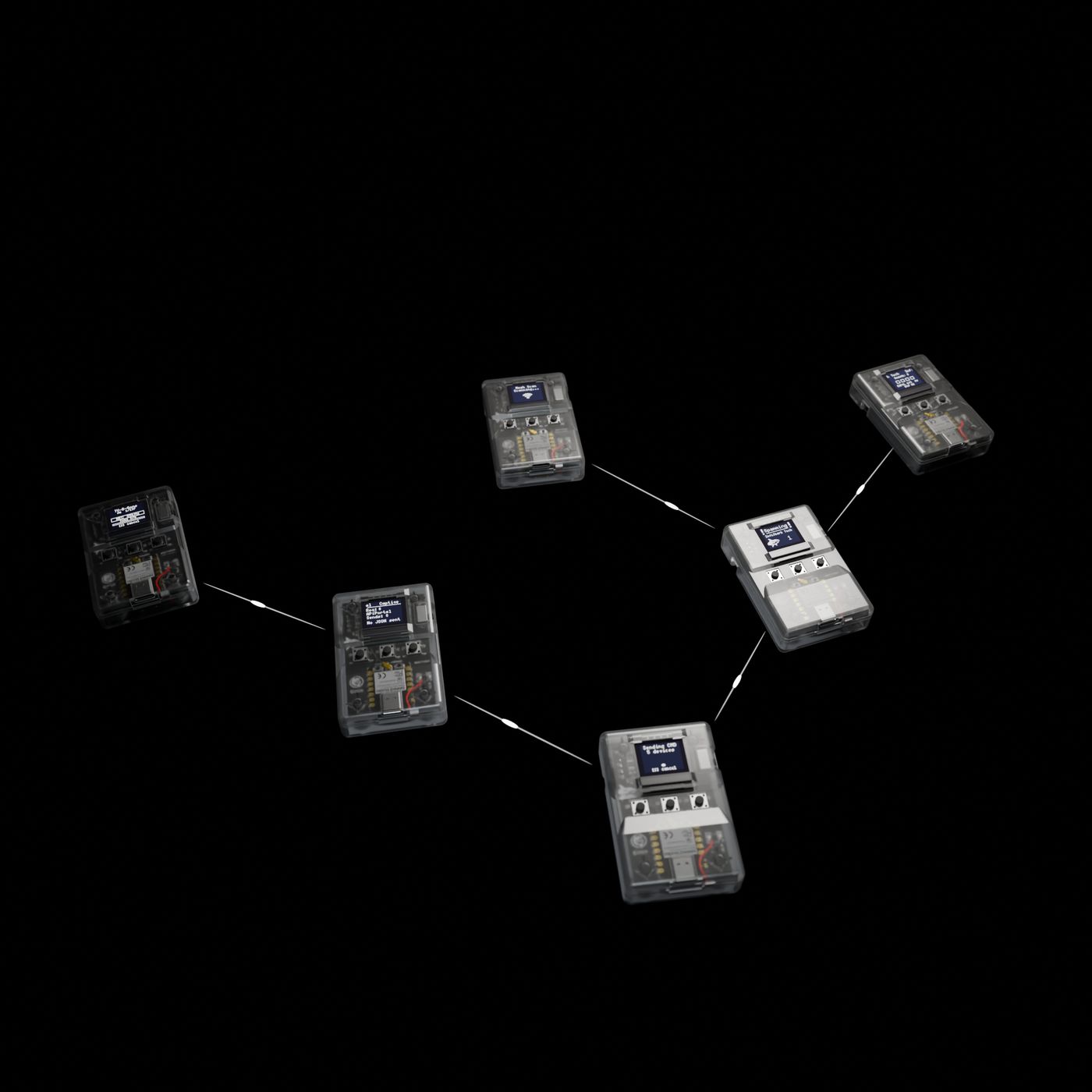
Most people start with one Nano and never need more. Shiver is the optional mesh mode: link several Nanos over ESP-NOW when a team, class, or building needs coverage in more than one place.

When one Nano is not enough.

Per hop
100 m
Near-LOS at 1 Mbps. ~200 m on Long Range.
Max nodes
16
Self-organising, self-healing.
Total reach
1.6 km
Sixteen-node linear chain. Realistic field deployment.
For owners
Free
Automatic OTA. No new hardware.

Why we built it

A single Nano is the right entry point: pocketable, affordable, and ready for BLE, Wi-Fi, IR, captures, portals, updates, and field work.

Sometimes the job is bigger. A class needs multiple devices. A team wants parallel captures. A lab wants sensors in more than one corner. That is where multi-packs make sense.

Shiver is the expansion path, not a requirement. Pair multiple Nanos when you want them to coordinate over ESP-NOW for broader wireless research coverage.

What mesh adds

Multiple Nanos can share work across a private mesh: commands, settings, captures, short messages, and node-to-node routing.

Long Range mode is optional: roughly 200 m per hop in exchange for a slower link. It is built for owners through the automatic OTA system, so one Nano is still the place to start.

[VII] / End Now shipping $54.99$49.99
Buy yours